Setting Up an AI Governance Committee Before Your Organization Adopts Clinical AI
4 min read An AI governance committee is a cross-functional group that decides which clinical AI tools a healthcare organization adopts, how…
Read More
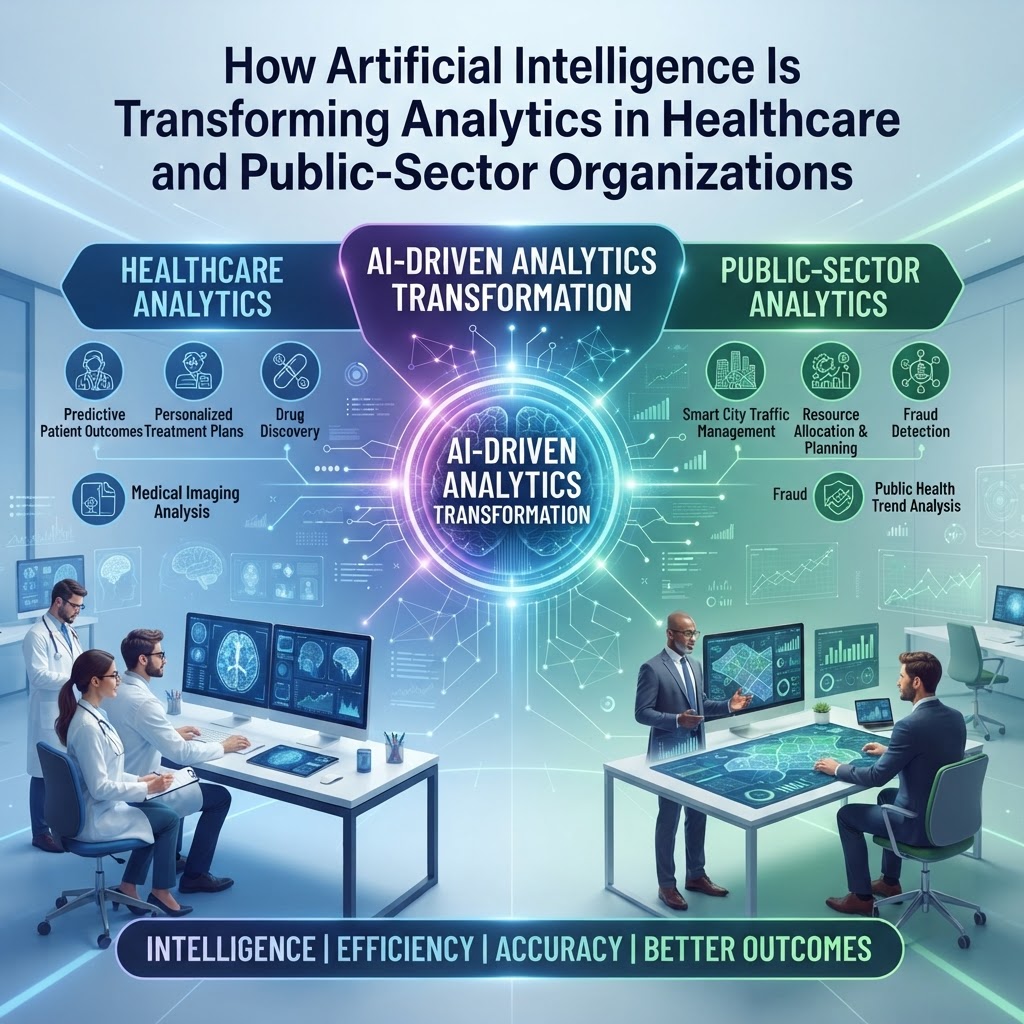
Every behavioral health provider, county human-services agency, and public pension system generates vast amounts of data. Clinical records, service utilization trends, claims data, member demographics, financial projections, operational metrics, and outcome measures collectively represent one of an organization’s most valuable assets. Yet for many organizations, this information remains largely underutilized collected to satisfy operational or regulatory requirements, stored in multiple systems, and rarely transformed into meaningful, actionable intelligence. That reality is rapidly changing.
Artificial intelligence (AI) is redefining what organizations can achieve with data analytics. Rather than simply reporting on what has already occurred, AI enables organizations to anticipate future outcomes, identify emerging risks, uncover hidden opportunities, and support more informed decision-making. It represents a shift from retrospective analysis to proactive intelligence.
For healthcare and public-sector leaders, this evolution presents both a significant opportunity and an important responsibility. Organizations that effectively leverage AI-enhanced analytics can improve outcomes, optimize operations, and strengthen strategic decision-making. Those that fail to establish the necessary foundations may struggle to realize meaningful value.
After nearly two decades of helping organizations navigate complex technology initiatives, from electronic health record (EHR) selection and optimization to enterprise modernization and pension-system transformation, we view AI as the next major advancement in analytics. The organizations that embrace it thoughtfully will gain a measurable advantage in delivering services, managing resources, and fulfilling their missions.
Before exploring the impact of AI, it is important to understand where most healthcare and public-sector organizations currently reside on the analytics maturity continuum.
Descriptive analytics provides historical visibility into organizational performance through reports, dashboards, and key performance indicators.
Examples include:
Most healthcare and public-sector organizations operate primarily at this level, and modern EHR, case management, and pension administration systems generally support these capabilities adequately.
Diagnostic analytics seeks to uncover the factors driving outcomes and trends.
Organizations using diagnostic analytics can answer questions such as:
Progressing to this level requires integrated data, analytical expertise, and a commitment to exploring root causes rather than simply reporting results.
Predictive analytics leverages statistical modeling, machine learning, and AI to forecast future outcomes based on historical patterns and current conditions.
Organizations can anticipate:
This is where AI begins to create transformative values.
The most advanced analytics capabilities not only predict likely outcomes but also recommend actions to achieve desired results.
Prescriptive analytics can help leaders determine:
For many organizations, this level may seem distant. In reality, advances in AI are making these capabilities increasingly accessible.
The challenge is not a lack of data. Most organizations already possess the information they need. The challenge is developing the infrastructure, governance, and analytical capability necessary to convert that data into meaningful action.
AI does not replace traditional analytics; it expands and accelerates it. By processing large volumes of data, identifying patterns, and generating insights at scale, AI enables organizations to uncover opportunities that would be difficult or impossible to identify through manual analysis alone.
Behavioral health providers and human-services organizations can benefit significantly from AI-powered pattern recognition and predictive modeling.
Potential applications include:
Machine learning models can identify individuals at increased risk of missed appointments, treatment disengagement, or service interruption, enabling proactive outreach and intervention.
By analyzing treatment approaches, client characteristics, diagnoses, and historical outcomes, organizations can identify factors associated with improved clinical effectiveness and support evidence-informed care decisions.
Predictive models can help detect elevated clinical or operational risks, allowing teams to intervene earlier and allocate resources more effectively. Importantly, these tools should support professional judgment, not replace it.
For healthcare organizations, AI-enabled financial analytics can generate measurable operational and financial benefits.
Examples include:
AI models can identify claims that are likely to be denied before submission, allowing organizations to correct issues proactively and improve reimbursement rates.
Advanced analytics can detect payer-specific reimbursement trends, helping organizations forecast revenue more accurately and improve financial planning.
Predictive analytics can identify potential coverage, eligibility, or authorization issues before they result in denials or delays.
Healthcare and public-sector organizations increasingly recognize the importance of understanding how social, economic, and environmental factors influence outcomes.
AI can help organizations:
Public pension and retirement systems also have significant opportunities to benefit from AI-enhanced analytics.
Potential applications include:
Despite its potential, AI is not a substitute for sound data management, governance, or professional expertise.
Organizations must recognize several important realities.
AI models depend entirely on the quality of the information they receive. Incomplete, inconsistent, siloed, or inaccurate data will produce unreliable results regardless of how sophisticated technology may be. Data quality remains the foundation of effective analytics.
Analytics models identify patterns and generate predictions. Human experts determine what those insights mean and how they should be used. Clinical decisions, fiduciary decisions, and policy decisions remain human responsibilities.
Historical data often reflects historical inequities. Without ongoing monitoring and evaluation, AI models may unintentionally perpetuate those biases. Organizations must establish rigorous processes for bias detection, validation, and model review.
Every AI initiative should answer fundamental questions:
Without governance, AI can create risk rather than reduce it.
Organizations seeking to leverage AI-enhanced analytics should first focus on three critical areas.
Effective analytics begins with accessible, reliable, and integrated data. Key considerations include:
Technology alone cannot deliver insights. Organizations must also develop:
For healthcare and public-sector organizations, governance is not optional. A comprehensive framework should address:
At The Joxel Group, we believe that successful AI adoption begins long before an organization purchases a technology solution.
Our approach focuses on helping clients build the capabilities necessary to generate sustainable value from AI-enhanced analytics.
We help organizations:
Most importantly, we help leaders ensure that analytics initiatives remain aligned with organizational strategy, mission, and stakeholder needs.
Technology alone does not create transformation. Transformation occurs when organizations use technology to make better decisions.
Your organization likely possesses more data than at any point in its history. The question is no longer whether data exists it is whether that data is being used effectively to drive decisions, improve outcomes, and advance your mission.
AI-enhanced analytics provides a powerful bridge between information and action. It enables organizations to move beyond reporting the past toward anticipating the future and shaping better outcomes.
However, success requires more than technology. It depends on clean data, effective governance, skilled professionals, and a clear understanding of the problems being solved.
Organizations that invest in these foundations will achieve more than improved analytics capabilities. They will strengthen their ability to serve clients, patients, members, and communities with greater insight, efficiency, and impact.
Ultimately, that is the true purpose of data, not merely to be collected, but to inform better decisions and create better outcomes.
Guiding Change. Delivering Value.
Ready to move from data collection to data-driven decision-making?
The Joxel Group helps healthcare and public-sector organizations develop AI-enhanced analytics capabilities that are grounded in data readiness, governance, and measurable business value. Through strategic advisory services, we help leaders transform data into actionable intelligence that improves performance, supports mission delivery, and positions organizations for the future.
Learn more at https://thejoxelgroup.com.

4 min read An AI governance committee is a cross-functional group that decides which clinical AI tools a healthcare organization adopts, how…
Read More
6 min read Understanding the total cost of ownership (TCO) for EHR systems is crucial for healthcare organizations aiming to make informed…
Read More6 min read Understanding EHR Implementation: A Comprehensive Guide for Healthcare Organizations In the rapidly evolving landscape of healthcare, the integration of…
Read MoreJoxel offers experienced, expert assistance throughout every phase of your journey. Reach out to start the conversation.